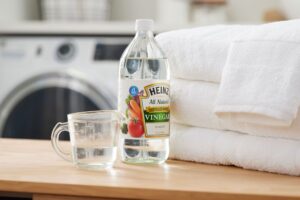


Many people are now using vinegar as a fabric softener to get soft, fresh clothes without the chemical buildup from commercial products. Store-bought softeners often leave residue on fabrics, dull colors, and reduce absorbency over time. In contrast, white vinegar as fabric softener helps break down detergent residue, naturally softens clothes, reduces static, and costs much less than branded options.
I’ve personally used vinegar in laundry for years, and when used correctly, the results are impressive. It’s eco-friendly, gentle on sensitive skin, and excellent for reviving clothes that have lost their softness.
So let’s take a closer look at how it works and how to use it safely for the best results.
Why People Use Vinegar Instead of Commercial Fabric Softener?
Many households are replacing traditional softeners with vinegar because it offers the same softness without synthetic chemicals.
Unlike liquid softeners that coat fibers with silicone, vinegar restores the natural texture of fabric fibers, making them fluffy again.
Here’s a quick comparison between commercial softeners and vinegar:
| Feature | Fabric Softener | Vinegar |
| Main Purpose | Adds artificial softness and fragrance | Removes residue, restores softness naturally |
| Chemical Content | Contains silicones and quats | 100% natural acid (acetic acid) |
| Cost | $6–$12 per bottle | About $1–$2 per gallon |
| Effect on Towels | Reduces absorbency | Improves absorbency |
| Skin Sensitivity | Can cause irritation | Hypoallergenic and gentle |
Read More: Homemade Floor Cleaner Recipes
On cleaning forums, people can’t stop talking about how vinegar completely changed their laundry game. One Reddit user even said, “I switched to vinegar, and my towels finally feel absorbent again.” That’s because vinegar breaks down residue instead of adding more layers to your fabric.
From my own experience, it works wonders when your clothes feel stiff, carry leftover detergent, or when your towels have lost their soft, fluffy feel.
Tip: If your clothes often come out rough or static-filled, try using vinegar once a week to reset your fabrics. It breaks down hidden detergent layers that regular rinsing can’t remove.
How to Use Vinegar as Fabric Softener (Step-by-Step)
Switching to vinegar as a fabric softener is simple. The key is using the right vinegar, the correct amount, and adding it at the proper time.
What type of vinegar to use?
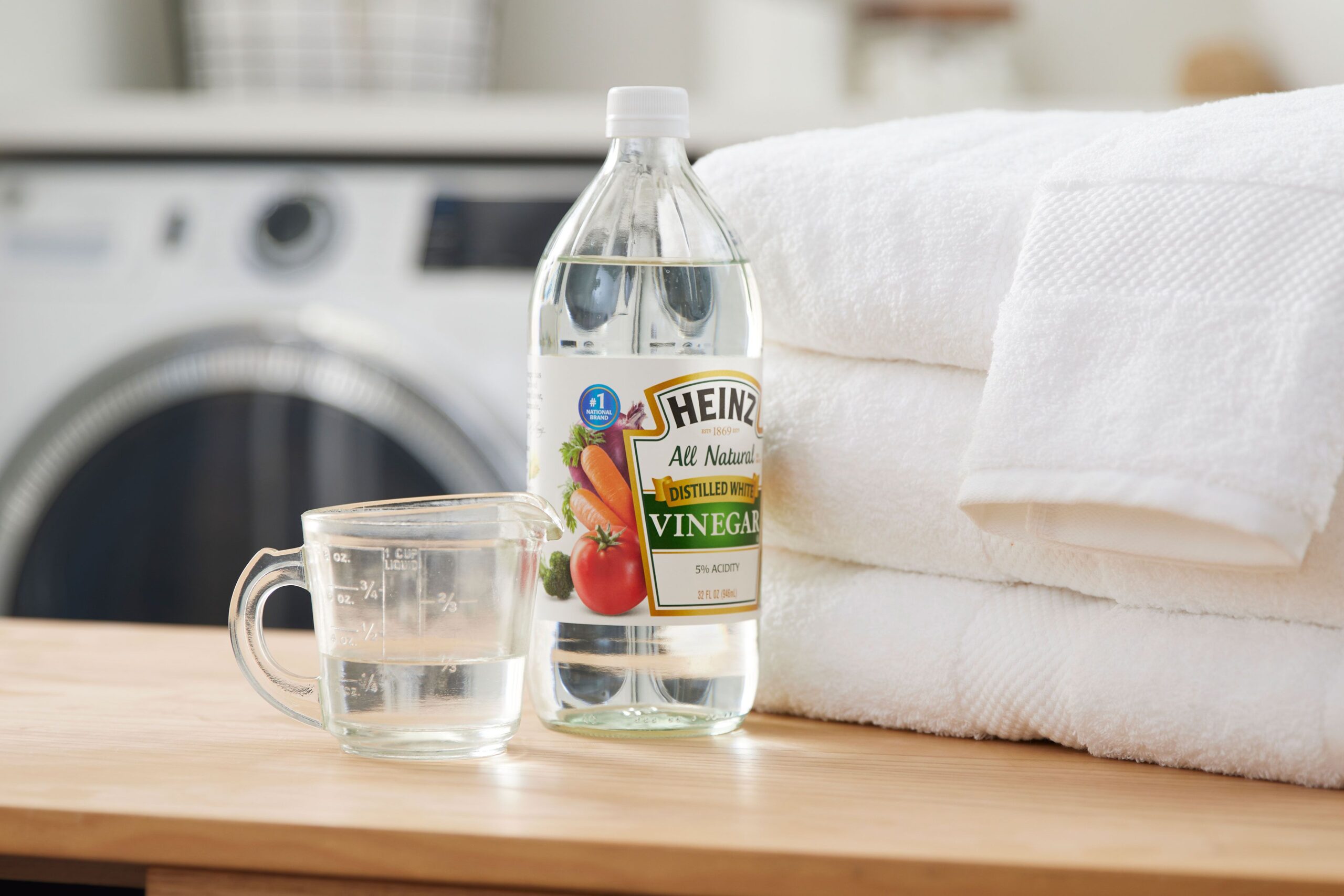
Always use white vinegar as fabric softener, not apple cider vinegar or other colored types. Distilled white vinegar is clear and contains about 5% acetic acid—strong enough to remove detergent residue yet gentle on fabrics.
Avoid using cleaning vinegar, which has around 6–8% acidity and can be too harsh on both your washing machine and clothes over time. Colored vinegars, such as apple cider, may leave light stains or lingering odors, especially on white or delicate fabrics.
Dosage & timing
For a standard load (around 7 kilograms or 15 pounds of laundry):
- Add ½ cup of distilled white vinegar to your washer’s softener dispenser.
- If your machine does not have a dispenser, pour vinegar directly into the final rinse cycle.
- For a top-load washer, wait until the rinse cycle starts before adding it.
The vinegar disperses evenly through the rinse water, helping it reach every fiber. It also helps neutralize any leftover detergent or odors from the wash cycle.
Read More: DIY Disinfectant Spray: Easy Recipes for Natural, Safe & Effective Cleaning
Best practices per fabric/wash cycle
- Delicates: Use ¼ cup vinegar for gentle cycles.
- Cotton or towels: ½ cup is ideal for removing stiffness.
- Synthetics: Slightly less—around ⅓ cup prevents static without overuse.
If you live in an area with hard water, vinegar can help balance mineral buildup and keep your clothes softer longer.
Tip: Quick recipe cheat sheet ½ cup vinegar in the final rinse for an average 7 kg load. That’s all you need to restore softness naturally.
Pros & Cons: Can Vinegar Replace Fabric Softener?
This is the most common question: can vinegar be used as a fabric softener and completely replace your liquid softener? The short answer is yes for most loads, but there are a few exceptions.
Pros
- Natural & inexpensive: Vinegar is much cheaper and eco-friendly.
- Reduces buildup: It dissolves detergent residue that often causes stiffness.
- Safe for sensitive skin: Since it contains no dyes or fragrances, it’s ideal for babies or people with allergies.
- Deodorizing effect: It neutralizes odors instead of covering them with artificial scents.
According to Better Homes & Gardens, vinegar evaporates completely during the rinse cycle and leaves no residue behind, which is why many users notice their clothes come out fresher.
Forum users also mention that vinegar helps keep their washing machines cleaner by preventing slime or softener residue inside dispensers.
Drawbacks & caution
While vinegar is safe, overusing it may cause issues in the long term. The mild acid can slowly affect rubber seals or hoses inside front-load washers if used daily. It may also weaken elastic fibers found in stretchy fabrics.
And remember, vinegar is not a detergent it won’t remove grease or stains by itself. Always pair it with a good-quality detergent.
Tip: For best results, use an occasional vinegar rinse every third or fourth wash instead of every single load. This keeps your washer parts safe and prolongs appliance life.
Pro Tips On Vinegar as Fabric Softener
Once you understand how vinegar works, you can enhance its benefits even more with a few advanced tricks.
Vinegar + Essential Oils or Additives
If you prefer a light scent, add 3–4 drops of skin-safe essential oil (like lavender or lemon) into the vinegar before pouring it into the dispenser. It provides a subtle, fresh aroma without the synthetic fragrance of commercial products.
Be sure the oil is diluted and added during the rinse, not directly on fabrics, as concentrated oils can leave marks.
Vinegar Use Frequency Strategy
Using vinegar in every load isn’t necessary. From my experience, using vinegar every third or fourth wash keeps clothes soft without wearing down washer components.
Many forum users shared that alternating vinegar cycles with regular detergent-only cycles gave them the best results, clothes stayed soft, and their machines remained clean inside.
Impact on Towels & Absorbency
One of the best uses of vinegar is for towels. Commercial softeners make towels feel smooth but reduce absorbency because they leave waxy coatings. Vinegar removes that buildup, bringing the original fluff back.
If your towels feel slick or don’t absorb water, a few vinegar rinses will fix that completely.
Tip: Wash old towels with ½ cup vinegar and no detergent to reset their fibers and restore absorbency. You’ll be amazed at the difference.
Troubleshooting & Myths (I Tested and Got the Solution)
When you start using vinegar as fabric softener, you might hear a few myths that sound convincing but aren’t entirely true. Let’s clear them up.
Myth 1: Vinegar leaves smell or residue
This one’s false. Distilled white vinegar as fabric softener doesn’t leave any odor because the acetic acid evaporates during rinsing. The faint smell disappears once clothes dry. If you ever notice a smell, you probably added too much or used apple cider vinegar instead of distilled white.
Myth 2: Vinegar corrodes washing machines immediately
Pure vinegar can corrode metal parts if used undiluted, but normal laundry dilution is completely safe. The key is moderation: use half a cup per load and don’t soak parts in vinegar directly.
Vinegar’s pH (around 2.5) is mild enough when mixed with rinse water. Studies on household appliances show that occasional vinegar use helps prevent soap scum and buildup rather than causing corrosion.
Issue 3: Fabrics that shouldn’t get vinegar
Avoid using vinegar on silk, leather, or fabrics with water-repellent coatings. It can weaken their finishes. Elastic materials may lose stretch if repeatedly exposed to acid.
Tip: Always test vinegar on a small, hidden section of delicate fabrics before using it in a full wash. It’s a simple way to prevent damage.
Vinegar vs Other Natural Alternatives
Many people exploring natural laundry care want to know how vinegar compares with other softeners. Here’s a simple comparison.
| Option | Pros | Cons |
|---|---|---|
| Vinegar | Removes residue, softens naturally, odor neutralizer | Slightly acidic, avoid daily use |
| Baking Soda | Deodorizes and balances pH | Can dull colors if overused |
| Wool Dryer Balls | Reduces static, reusable | No softening in the wash cycle |
| Fragrance-Free Softeners | Safe for sensitive skin, easy to use | Still contains mild chemicals |
| DIY Hair Conditioner Mix | Adds light scent and softness | Needs extra rinse, may build up |
Each alternative works differently. I still prefer vinegar because it’s simple, effective, and doesn’t leave residue on the washer or clothes.
FAQs
Can vinegar be used as a fabric softener in all washes?
Yes, vinegar works well for most loads. However, for fabrics with special coatings or elastics, it’s better to skip vinegar or use it occasionally.
Does vinegar work as a fabric softener for towels?
Absolutely. Vinegar removes the waxy film from towels, restoring their natural absorbency. After a few washes, towels feel fluffier and dry faster.
How much white vinegar as fabric softener should I use?
Use about ½ cup for a standard load. Smaller loads may need just ¼ cup. For heavily soiled laundry, add an extra ¼ cup during the rinse cycle.
Using vinegar as fabric softener — will it damage my washing machine?
Not if used correctly. Occasional use is safe. Avoid pouring undiluted vinegar directly on rubber seals or metal parts. Always add it through the dispenser or rinse water.
How to use vinegar as a fabric softener safely with elastic fabrics?
Limit frequency and dilute it properly. Mix ¼ cup vinegar with ¾ cup water before adding it to your rinse if washing items with elastic bands or stretch fabric.
Can vinegar as fabric softener replace commercial softeners completely?
For most households, yes. Vinegar does nearly everything a commercial softener does softens, reduces static, and eliminates odors without buildup or irritation.
Conclusion
Using vinegar as fabric softener is one of the simplest eco-friendly swaps you can make in your laundry routine. It helps soften clothes, remove residue, and freshen fabrics without relying on synthetic chemicals.
A quick recap:
- Works best with regular and cotton fabrics
- Avoid overuse to protect washer seals
- Test on delicate fabrics before full use
- Ideal for restoring towel absorbency
- Adds freshness naturally without heavy scents
Experiment with vinegar once or twice a week and see the difference for yourself. You’ll likely notice softer clothes, cleaner towels, and a fresher-smelling washer.
Try it out, and share your experience with others you may never go back to bottled softeners again.