



I’ve seen many beautiful kitchens with super dirty glass-top stove surfaces, which highlights the importance of knowing how to clean a glass top stove properly.
No matter how clean and organized the kitchen is, I am never satisfied until the glass-top cooking range is sparkling.
A shiny surface enhances the tidy and refreshing look of any kitchen.
It’s easy to clean and achieve that gleaming finish.
However, it’s sensitive and prone to scratches if you use the wrong detergent, tools, methods, or apply too much pressure while cleaning.
When your family demands multiple, complex dishes daily, removing cooked-on grease from the stovetop can be challenging after a few weeks.
Regular weekly cleaning, along with daily maintenance, is a good guideline for keeping it spotless.
Today, I’ll share the easiest and cheapest way from my professional experience to clean your glass cooktop.
A method that practically costs nothing!
How to Clean a Glass Top Stove Without Damaging It
Avoid using heavy cleaning materials or tools on your glass cooktop. It’s sensitive, and any wrong action can cause scratches or cracks.
Regular cleaning, rather than heavy scrubbing, is the key. Gentle tools work best for maintaining your cooktop.
There’s no magic detergent to make it super shiny.
You just need to follow a simple process with a few steps to keep it looking like new.
Materials Needed
- Sponge
- Washing-up liquid
- Glass-top scraper (Mandatory for tough grease)
- Microfiber cloths
- Gloves (optional)
Which Glass Stove Top Cleaner Is Best?
While many prefer commercial products, a mild soap or vinegar solution works just as well as a typical glass stove top cleaner. If you have a commercial one at home, just make sure it’s non-abrasive and safe for use on glass surfaces.
How Clean Glass Stove Top Surfaces Make a Difference
A clean surface not only looks good but also prevents buildup over time. Knowing how clean glass stovetop surfaces should be can improve both hygiene and efficiency.
Best Way to Clean Glass Stove Top
Here are 5 easy steps to make your glass cooktop look like new. It takes just 10-15 minutes and doesn’t require any harsh chemicals. You can clean it perfectly using only common items from your kitchen.
Let’s get started with the step-by-step instructions!
Step 1: Let The Stove Burner Cool
Never start cleaning while the burner is hot to avoid the risk of burns.
Additionally, cleaning a hot surface may damage your cooktop beyond repair. Therefore, allow it to cool completely before you begin.
Step 2: Wet and Loosen the Grease
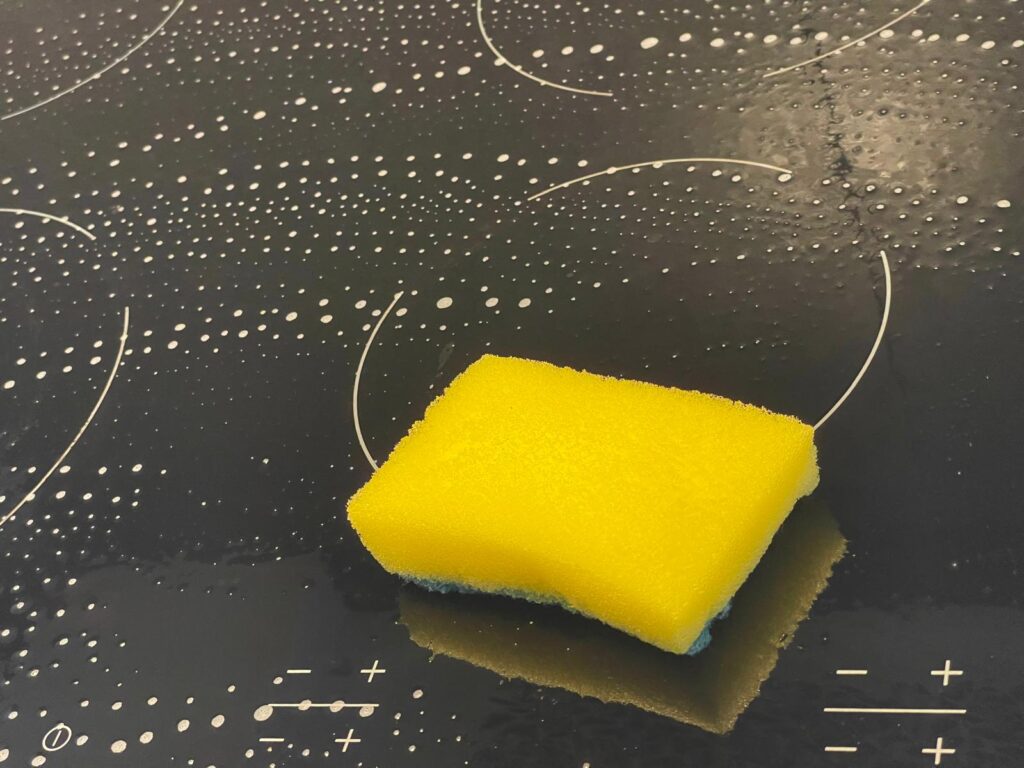
No matter how dirty the stove surface is or how much grease is around the cooking range!
Start by wetting it for a few minutes. This will make the cleaning process easier.
Firstly, wet your sponge with warm tap water and keep it soaked. Add some washing-up liquid and rub for 30 seconds.
Then, wait for 4-5 minutes.
Finally, wipe everything down with microfiber cloths. And let the surface dry.
Now, the grease is softened and clearly visible.
Step 3: Clean Cooked-On Grease with a Scraper
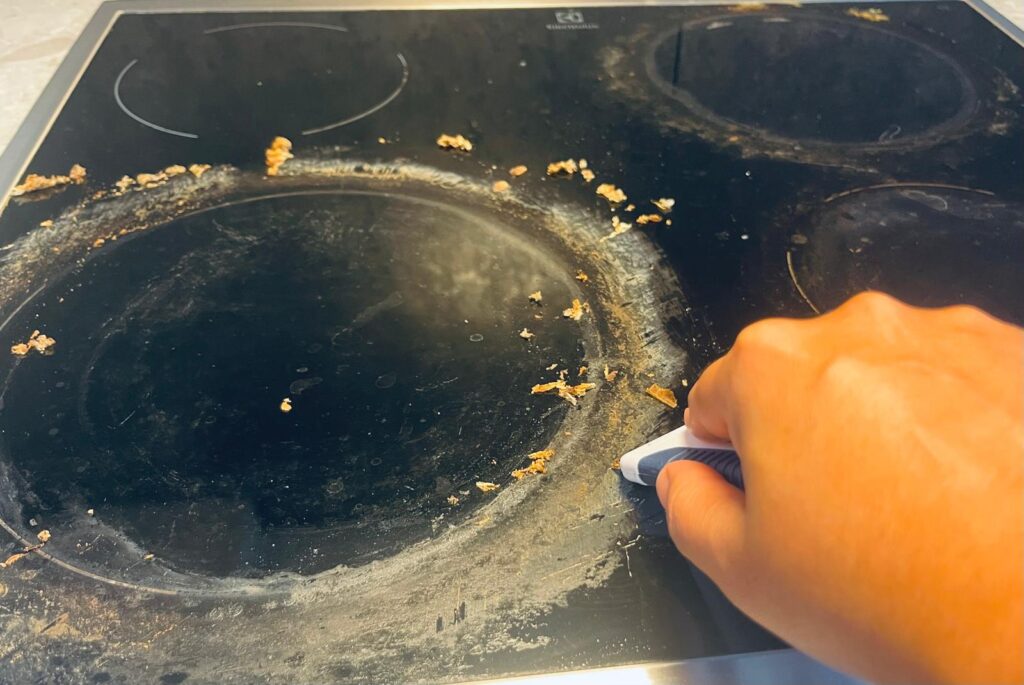
Now that the grease is well-soaked with soapy water, it’s easier to remove using a scraper.
Be patient and careful. Hold the scraper as flat as possible, and gently scrape away the grease. Trust me, it will come off.
Start at one point of your glass top cooking range and work your way around. If all the grease doesn’t come off in one pass, identify the remaining spots and scrape them carefully.
Collect the loosened grease and wipe it away with a microfiber cloth. If any grease remains, scrape it again. Each time you scrape, wipe the surface with a microfiber cloth.
If the grease starts to dry again, repeat Step 2, then use the scraper afterward.
Avoid scraping while the cooktop is wet, as it can cause white water stains and make the grease less visible.
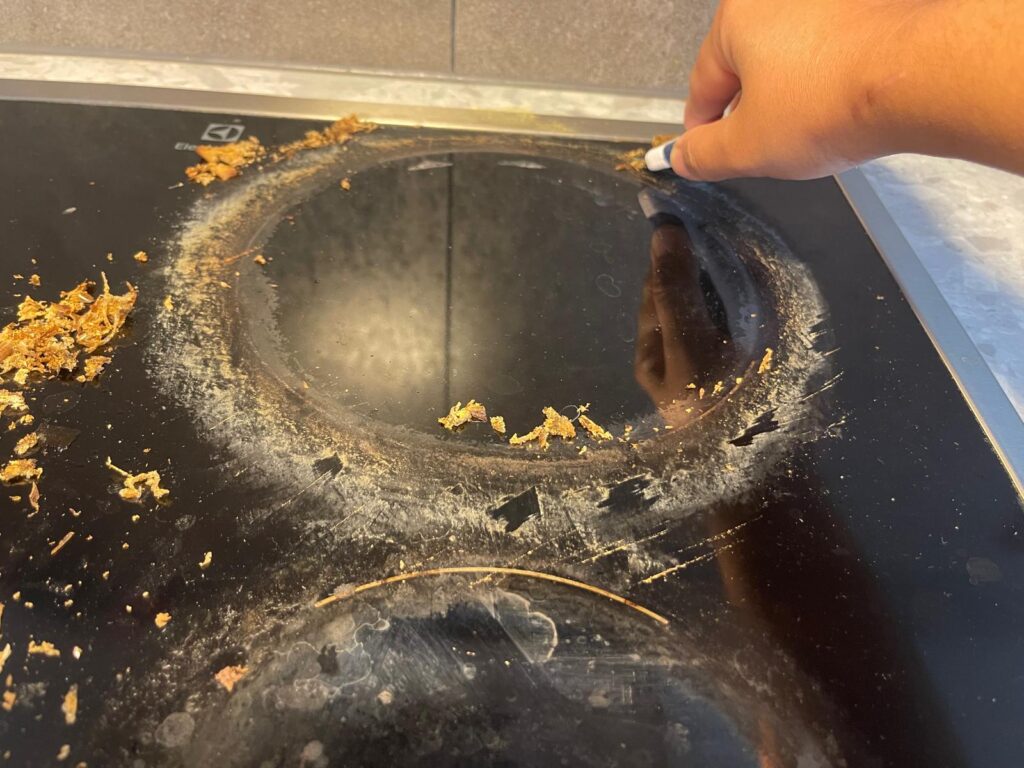
Even if there’s a buildup of months’ worth of grease, this process will help you make your glass cooktop spotless.
Tips:
Always read the manual for your stove. If it advises against using a scraper or razor blade, refrain from scraping.
Step 4: Clean the Edges of the Glass-Top Stove Surface
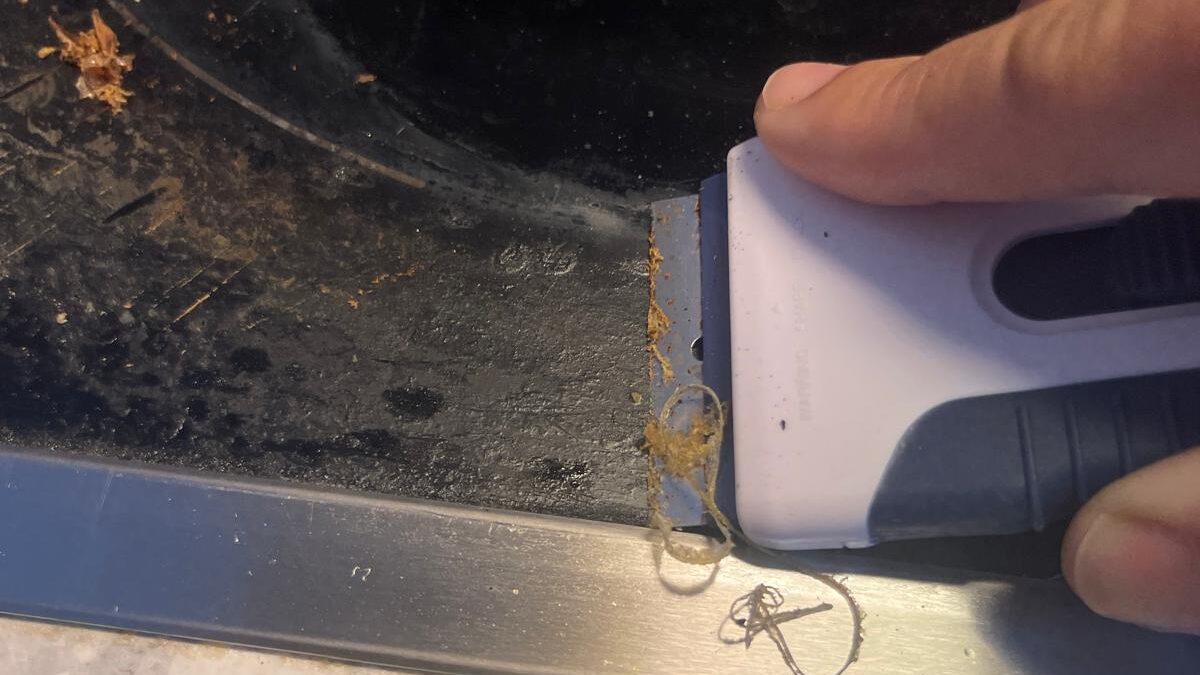
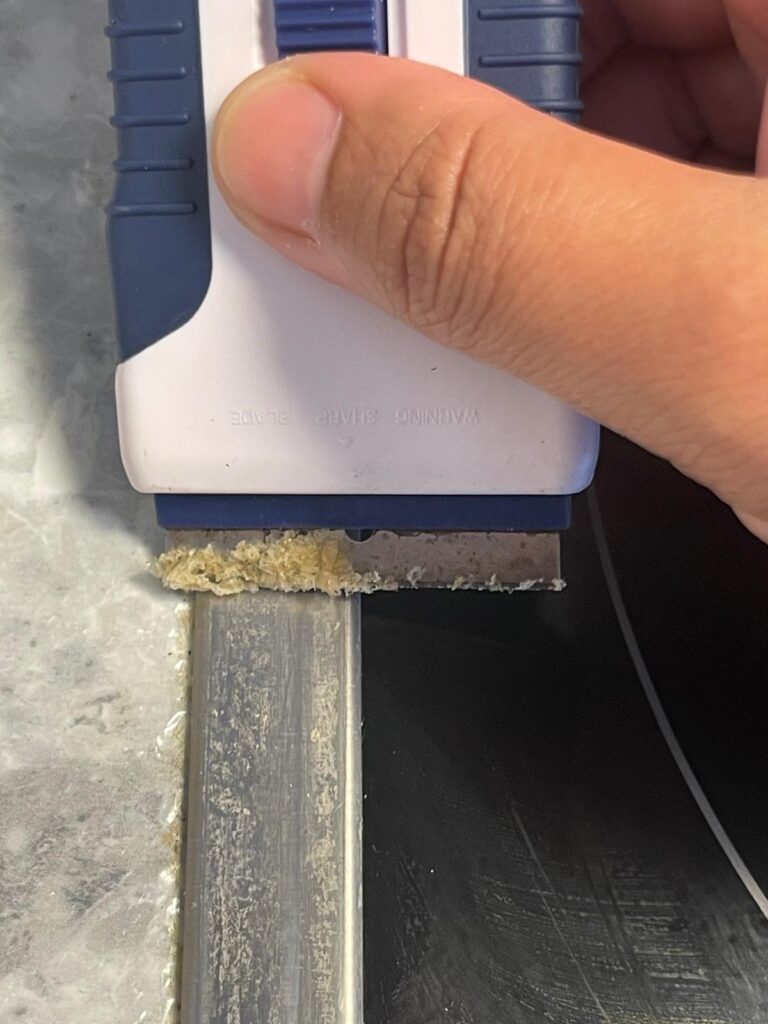
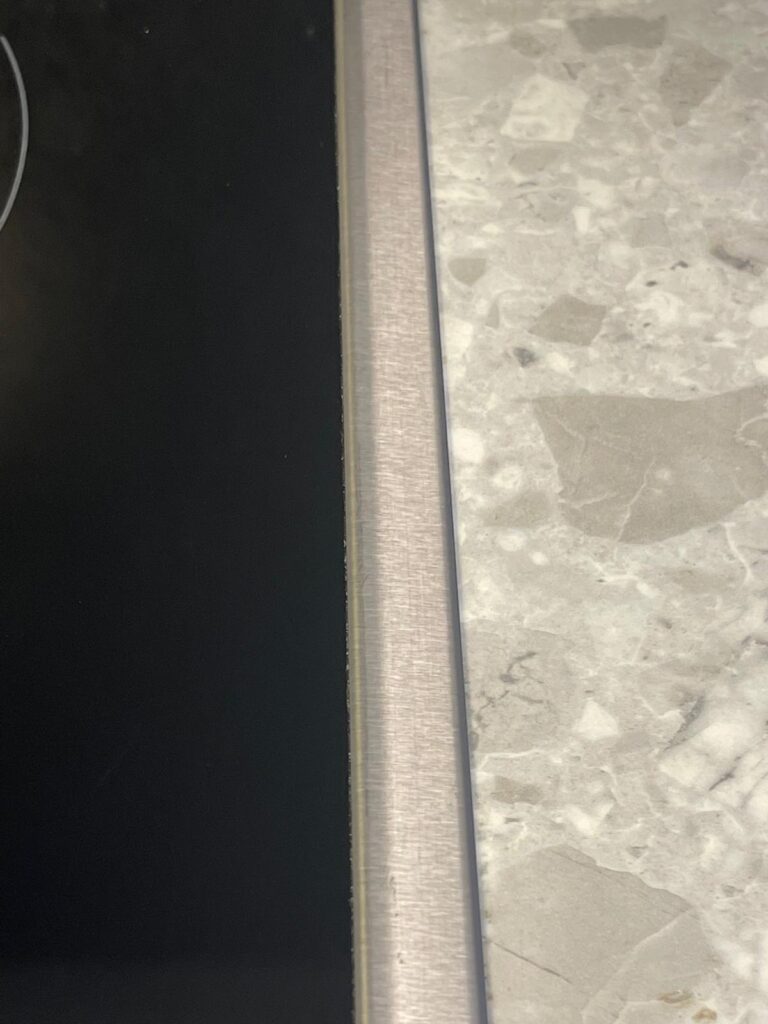
You’ll often find a lot of grease along the edges of the glass-top surface. Carefully lift it using the corner of your scraper.
Check the borders as well; there may be some grease there too.
If the grease is already hardened, repeat Step 2 by wetting the area with soapy water.
Gently scrape and wipe the grease away.
Step 5: Final Check
After multiple rounds of scraping and wiping, your stove should look almost new.
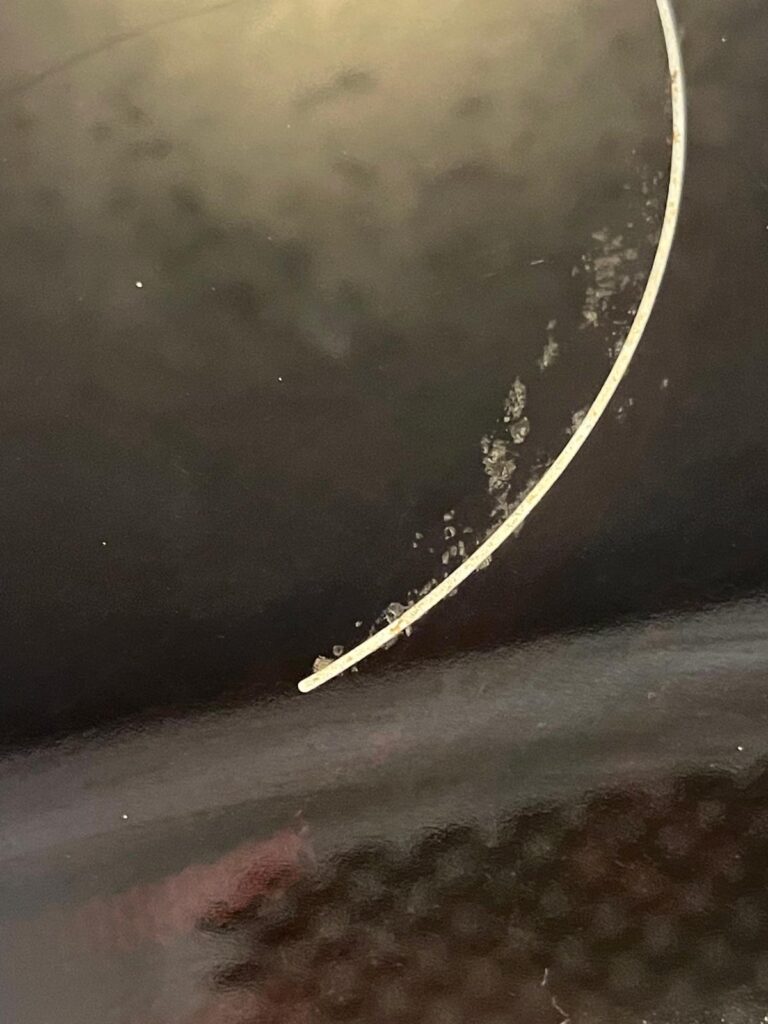
However, small spots may still be present, often invisible to the naked eye.
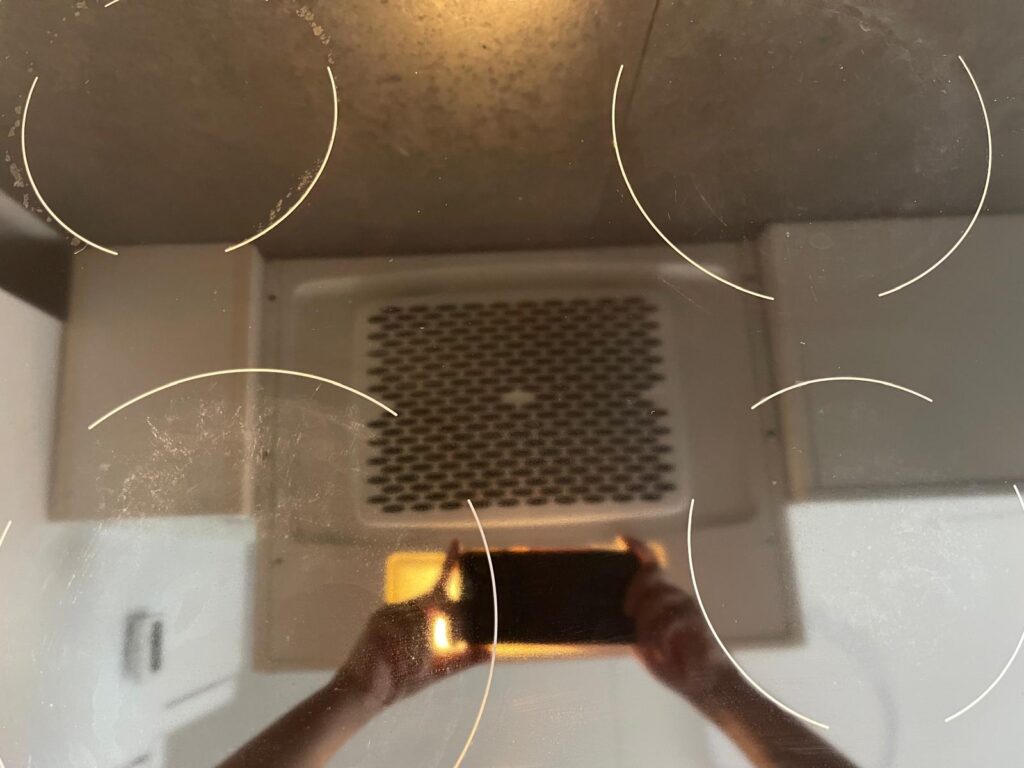
To catch these, use your mobile camera lens as a guide. Even the tiniest spots become visible through the lens.
Before finishing, I always inspect the stove with my mobile camera. If I find any remaining spots, I use the scraper to remove them.
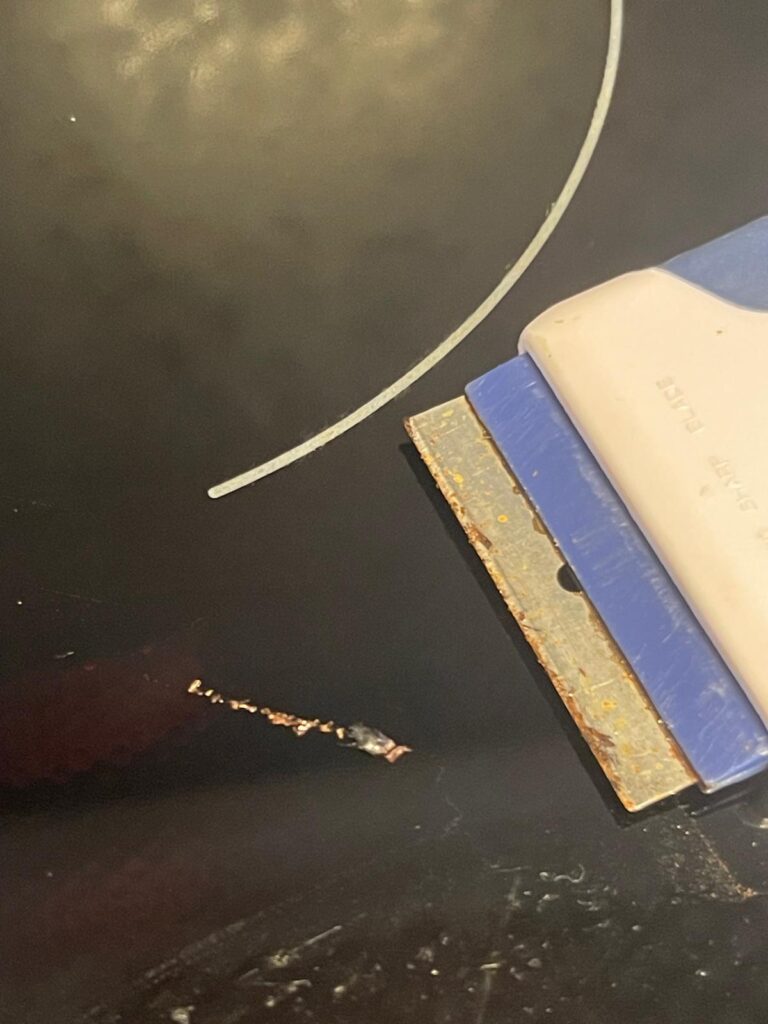
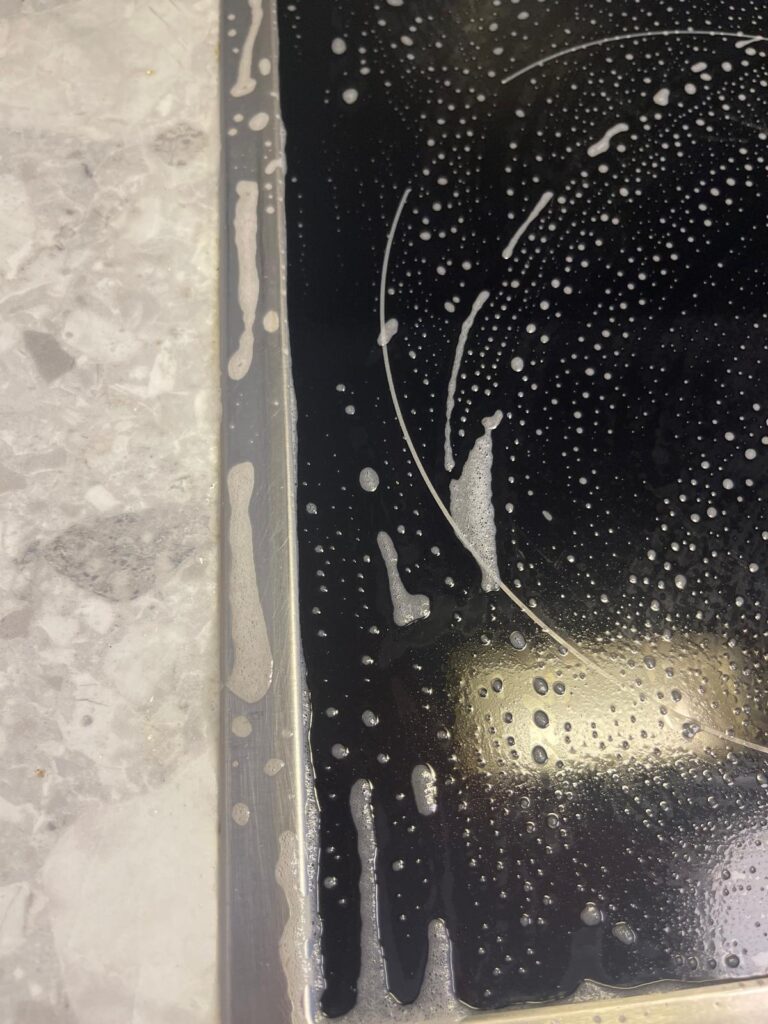
Finally, wipe the surface with a microfiber cloth soaked in soapy water, and admire your sparkling result. That’s how to clean a glass top stove the right way—simple, safe, and effective.
Now it’s done! Your glass-top cooking range, along with the entire stove surface, is super shiny now.
Pro Tips
- Harsh chemicals can damage or scratch your glass top stove.
- If you use a special detergent, always check the recommended dosage and your glass-top stove manual. Using the wrong or overly strong detergent can ruin your glass top.
Daily Cleaning of Glass Cooktop Stoves
It’s easy to maintain the shine of your glass cooktop.
When grease builds up around the cooking range, cleaning it may require more effort and time.
A clean cooktop surface is smooth and easy to maintain daily. Practically, it’s not difficult to keep it spotless.
Just follow these 2 steps daily after cooking:
- After each cooking session, once the surface is cool, rub it for a minute with a soapy sponge. Don’t forget the edges and borders.
- Wipe it with a damp cloth, followed by a dry one.
After that, there’s nothing more you need to do.
However, make sure to have a more detailed cleaning plan once every week or two. During these sessions, focus on removing any hard grease around the cooking ranges.
How to Clean Glass Top Stove Stains?
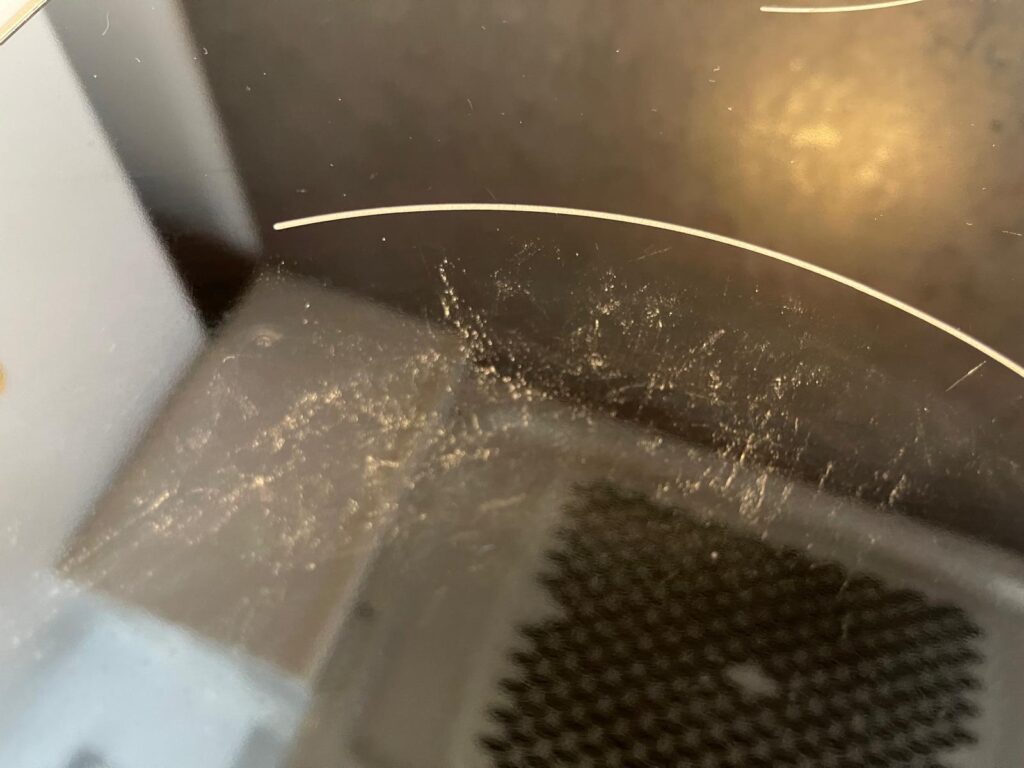
Prevention is Always Better Than Cure
Always be aware of what can cause stains:
- Using rough cleaning detergent while the stove burner is hot.
- Regular use of a damaged cooking pot in the bottom.
- Rubbing the cooking pot hard on the surface while tossing food.
- Using the wrong type of cleaning detergent.
- Spills and burns from boiling milk, oil, or greasy liquid food.
- Unnecessary, hard, and repetitive scraping, even when there’s no grease to clean.
Always be careful to avoid accidentally damaging your glass cooktop.
Sometimes, it’s hard to tell if it’s a stain or a scratch.
If it’s a stain, follow the five steps mentioned earlier. Hopefully, you will get help.
If it’s still not gone, maybe it’s a scratch or damage.
🍽️ Want a spotless kitchen the easy way? Follow this step-by-step kitchen cleaning guide to learn the simplest cleaning method!