
Affiliate Disclosure
This article may contain affiliate links. If you purchase through these links, we may earn a small commission at no additional cost to you. As an Amazon Associate, we earn from qualifying purchases.
Still finding streaks after your robot finishes mopping? Some machines spread residue, miss stubborn marks, or leave you washing the mop more often than expected. The Roborock Qrevo Curv 2 Flow robot vacuum takes a different approach with a roller that receives fresh water while a scraper removes dirty water.
This review examines its cleaning performance, carpet protection, navigation, dock maintenance, and value for US buyers. You will learn where the roller design helps and which compromises matter before buying.
I have not personally tested this model. This is a researched review based on the exact Amazon listing, Roborock documentation, and published testing from Vacuum Wars, RTINGS, and Tom’s Guide. Their findings differ, so I distinguish manufacturer claims from test results. Let’s start with who should consider it.
Roborock Qrevo Curv 2 Flow Robot Vacuum: Quick Verdict
The Flow is worth considering for homes with mostly hard floors and frequent mopping needs. Its refreshed roller and automated dock reduce routine work. However, mixed stain removal results, carpet pet hair limitations, and a tall body make it less suitable for buyers expecting deep cleaning or access beneath low furniture.
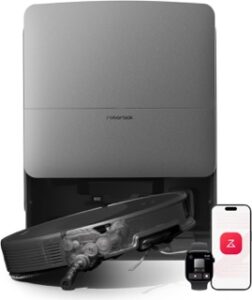
roborock Qrevo Curv 2 Flow Robot Vacuum and Mop
A practical option for frequent floor cleaning
✔ The roller receives fresh water while collecting dirty water during cleaning.
✔ The dock handles dust emptying, roller washing, drying, and water refilling.
✘ Water tanks and cleaning components still need your attention.
What Comes With the Roborock Qrevo Curv 2 Flow?
The exact product covered here is ASIN B0FXG2BDTJ. This is the Flow version with the SpiraFlow roller system, rather than a traditional pair of spinning mop pads.
The Roborock Qrevo Curv 2 Flow robot vacuum and mop package contains the following items:
| Package item | Included |
|---|---|
| Robot with integrated roller mop | Yes |
| Multifunctional dock | Yes |
| Disposable dust bag | Installed in the dock |
| Power cord | Yes |
| User manual | Yes |
Roborock’s official product specifications confirm the package contents and manufacturer features discussed below.
For help separating the wider lineup, our Roborock model comparison explains the features that distinguish different options.
The White Design: How Does It Fit Into Your Home?
The Flow has a white robot and matching multifunctional dock. Roborock lists the robot at approximately 13.9 × 13.9 × 4.7 inches. Tom’s Guide reports a dock measuring approximately 17.7 × 17.7 × 17.7 inches.
The dock needs a permanent, accessible position. You must be able to open it and remove the water tanks without moving surrounding furniture.
The model’s user manual specifies a placement space of at least 2.96 feet high, 1.51 feet wide, and 3.94 feet deep, with the dock against a wall on a hard, flat floor. These are dimensions for the reserved space, rather than extra clearance to add on every side. Follow the manual supplied with your unit.
The white finish may suit a visible kitchen or living room, but the practical question is whether the station fits without blocking a walkway.
The robot’s height also matters. For example, a sofa with only four inches of clearance would prevent a robot this tall from cleaning underneath. That is a hypothetical fit example, not a result from personal testing.
If furniture clearance is your main concern, the Saros 10R review discusses another model’s design and its tradeoffs.
💡 Tip
Measure beneath your lowest furniture and check access to the dock’s tank compartment before choosing a location.
Roborock Qrevo Curv 2 Flow Roller Mop: What Makes It Different?
Instead of two spinning pads, this model uses a roller that is continuously refreshed during cleaning. Roborock describes eight water delivery points, a scraper for collecting dirty water, and up to 15 N of downward pressure.
The basic process is straightforward:
- Fresh water reaches the roller.
- The roller scrubs the floor.
- The scraper removes dirty water.
- The dock washes the roller during its cleaning routine.
The appeal is less reliance on a mop surface that becomes progressively dirtier between dock visits. That design advantage does not, by itself, prove better stain removal.
Does the Roller Actually Clean Better?
The independent evidence is mixed.
Tom’s Guide reported streaking at the default water setting. Increasing water output improved the finish, and its reviewer found the robot effective at handling everyday kitchen dirt and cooking splatter.
Vacuum Wars found weak performance on dried stains, including when it increased water output. RTINGS reported that a second pass removed much of the residue, but its stain detection did not reliably direct extra attention to dirty areas.
These findings support a qualified conclusion: the roller is worth considering for routine mopping, but it is not a guaranteed upgrade over every spinning mop.
If you are comparing roller systems specifically, the eufy E25 review examines another approach to refreshing the mop during cleaning.
What About Edges and Corners?
The roller moves toward edges, but it cannot guarantee complete coverage beside every wall or furniture leg.
Tom’s Guide also noted that the side brushes do not extend outward. An extending mop and an extending vacuum brush address different tasks, so one should not be mistaken for the other.
For a spinning mop alternative, our Qrevo S5V review explains how its edge cleaning system works.
💡 Tip
If streaks appear, check roller cleanliness and the water setting. Follow your flooring manufacturer’s moisture guidance before increasing water output.
Interested in the roller approach?
✔ Continuous water delivery refreshes the roller as it travels across the floor.
✔ The edge adaptive design helps the mop reach toward room boundaries.
✘ Published testing does not establish it as the strongest choice for dried stains.
Vacuuming Performance on Dust, Crumbs, and Pet Hair
The advertised suction is 20,000 Pa, but that specification alone cannot establish how thoroughly a robot cleans a particular floor.
In Vacuum Wars’ published cleaning tests, the Flow removed 87% of embedded sand from medium pile carpet, compared with the publication’s reported average of 76.7%. In its flattened pet hair test, it removed 77.5%, below the reported 81% average. These figures come from the review updated September 15, 2026.
RTINGS was more critical of carpet pet hair pickup and reported debris remaining near baseboards and corners.
The useful distinction is between cleaning ordinary debris and lifting embedded hair. A robot can perform well in one test while leaving more work for the owner in another.
Hair pickup is also different from hair wrapping around a brush. Vacuum Wars recorded 0% tangling in its seven-inch hair test, but that controlled result does not eliminate the need to inspect brushes at home.
💡 Tip
If your home has extensive carpeting and several shedding pets, prioritize evidence about embedded hair removal over the suction figure.
Can It Clean Around Rugs Without Getting Them Wet?
The roller lifts by up to 15 mm, and the Roller Shield covers the wet roller when the robot approaches carpet. These features are designed to separate wet mopping from carpet vacuuming.
That is useful in a room where hard flooring meets a rug, but carpet protection does not guarantee compatibility with every rug.
Loose fringe, thick pile, and awkward transitions can still cause problems. RTINGS reported that tassels could catch the robot.
Keeping a rug dry and cleaning it thoroughly are also separate questions. The shield addresses moisture contact; it does not resolve the carpet pet hair limitations described above.
If raised thresholds are the bigger obstacle in your home, our Saros 20 review looks at climbing features and their limits.
💡 Tip
Watch the robot cross each rug during its first run. Use a no go zone where fringe or an uneven edge repeatedly causes trouble.
Navigation, App Controls, and Battery Life
The Flow combines LiDAR mapping with camera and structured light obstacle recognition. Roborock advertises recognition of more than 200 object types and map support for up to four floors. Recognition claims should not be read as a promise that every object will be avoided.
The app provides room selection, scheduling, cleaning settings, and no go zones. These controls matter when one room needs more frequent attention than another.
RTINGS found obstacle handling more dependable on hard floors than carpet. It also reported that the robot did not consistently avoid pet waste.
The Amazon listing states 242 minutes of battery life. Treat this as a listed specification, not a prediction for your home: suction level, mopping settings, routes, and dock visits affect how much cleaning a charge provides.
The manual confirms 2.4 GHz Wi-Fi support. A router offering both bands can still be suitable, provided the robot can connect to its 2.4 GHz network.
The camera also supports pet monitoring functions. Review the relevant account and camera settings before using those features.
⚠ Warning
Do not rely on obstacle recognition to avoid pet accidents. Inspect the floor before starting a cleaning run when accidents are possible.
Read more: Roborock Qrevo S Pro review.
How Much Maintenance Does the Self-Cleaning Dock Still Need?
The dock reduces repetitive work, but it does not eliminate cleaning and upkeep.
| What the dock handles | What the owner still handles |
|---|---|
| Automatic dust emptying | Replace full dust bags |
| Roller washing | Inspect the roller and scraper |
| Heated drying | Check components for retained dirt |
| Refilling the robot’s water supply | Refill the clean water tank |
| Collecting dirty water | Empty and clean the dirty water tank |
| Charging | Clean sensors and inspect removable parts |
| Automated washing routines | Clean the dock and tray when needed |
Roborock advertises mop washing at up to 167°F and drying at 131°F. These describe the dock’s functions, not the temperature of water applied to your floor.
The removable roller, scraper, and wastewater components make access easier, but they still need attention when debris or residue builds up.
This model also lacks a separate detergent tank, as noted by Tom’s Guide. If using an approved solution, follow its dosing instructions rather than expecting automatic detergent dispensing.
Roborock lists operating noise around 62 to 65 dB, washing and drying around 56 to 57 dB, and brief dust emptying around 70 dB. These are manufacturer figures; perceived noise depends on the room and distance.
For households that already follow a regular deep cleaning routine, dock and sensor care can become another scheduled task.
💡 Tip
If cleaning quality drops, inspect the roller, scraper, and wastewater path before assuming the problem is software.
Less repetitive mop care
✔ Automatic washing and drying reduce the need to clean the roller after every run.
✔ Removable components provide access when maintenance is needed.
✘ You still manage water tanks, dust bags, and accumulated debris.
Roborock Qrevo Curv 2 Flow Robot Vacuum: Pros and Cons
PROS & CONS
roborock Qrevo Curv 2 Flow Robot Vacuum and Mop
Reasons to Consider It
✔ Refreshed roller: An appealing design for households that mop frequently.
✔ Useful dock automation: Several repetitive dust and mop care tasks happen automatically.
✔ Carpet protection features: Roller lifting and shielding help manage transitions between floor types.
✔ Accessible maintenance components: Removable parts make inspection and cleaning more practical.
Reasons to Choose Another Option
✘ Mixed stain removal evidence: The roller design does not guarantee superior scrubbing.
✘ Carpet pet hair limitations: Some households will still need regular manual vacuuming.
✘ Tall robot body: Low furniture can leave areas outside its reach.
✘ Ongoing upkeep: Automation still involves tank cleaning, replacement supplies, and component care.
Roborock Qrevo Curv 2 Flow vs Qrevo 2 Pro: Which Should You Choose?
The Qrevo 2 Pro is a useful comparison because it uses spinning mops rather than a roller.
| Buying factor | Curv 2 Flow | Qrevo 2 Pro |
|---|---|---|
| Mopping system | SpiraFlow roller | Dual spinning mops |
| Advertised suction | 20,000 Pa | 20,000 Pa |
| Carpet approach | Roller lift and Roller Shield | Automatic mop removal at the dock |
| Navigation | LiDAR | LiDAR |
| Dock functions | Dust emptying, washing, drying, refilling | Dust emptying, washing, drying, refilling |
| Official US price observed September 28, 2026 | $799.99 | $549.99 |
These are Roborock’s displayed US prices on the stated date, not guaranteed Amazon prices. Promotions, stock, and seller terms can change.
At that snapshot, the Flow costs $250 more. The question is whether you specifically value its continuously refreshed roller enough to pay the difference. The higher price alone doesn’t mean better cleaning.
If automatic mop care isn’t essential, a simpler option may be worth considering. Our Q7 M5+ review explains the compromises involved in a more basic vacuum and mop setup.
Read more: Compare robot vacuum and mop combinations.
Final Verdict: Should You Buy the Flow?
The Roborock Qrevo Curv 2 Flow robot vacuum is worth considering for homes with mostly hard floors, frequent mopping needs, and enough space for its dock. Its main appeal is the combination of a refreshed roller and automated maintenance tasks.
I would be more cautious if embedded carpet hair, stubborn dried stains, low furniture, or minimal owner involvement are your main priorities. The published evidence does not support treating this as the best choice for every household.
Before buying, compare the current offer with the Qrevo 2 Pro, measure your available space, and confirm the seller’s return and warranty terms. Choose it because its particular features fit your routine, rather than because the roller design sounds newer.
Frequently Asked Questions
Can You Use Your Own Floor Cleaner in the Roborock Qrevo Curv 2 Flow?
Use only cleaning solution recommended by Roborock and follow the stated dilution instructions. The manual says not to add disinfectant and specifies cold water for the clean water tank. A floor cleaner that works with a manual mop is not automatically suitable for the robot.
Does the Roborock Qrevo Curv 2 Flow Robot Vacuum and Mop Need a Water Connection?
No. The reviewed package uses removable clean and dirty water tanks. You refill one and empty the other. Normal operation does not require a permanent plumbing connection.
Can You Buy a Replacement Roborock Qrevo Curv 2 Flow Roller Mop?
Yes. Roborock’s US store listed a replacement roller specifically for this model when checked on September 28, 2026. Availability can change, so confirm the complete model name before ordering. Do not assume a roller for another robot will fit.
Will It Replace a Manual Mop Completely?
Not necessarily. You may still need to clean inaccessible corners, areas beneath low furniture, and marks the robot leaves behind. For those occasional tasks, the RinseClean spin mop review covers a manual option with separate clean and dirty water.












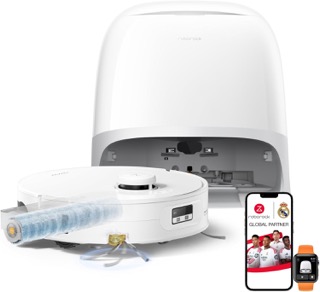
Roborock Qrevo Curv 2 Flow Robot Vacuum Review: Worth Buying?
Still deciding whether a roller mop is worth the upgrade? This Roboroc…
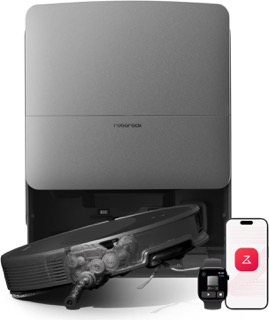
Roborock Saros 20 Robot Vacuum Review: Is It Worth Buying?
Still rescuing your robot from thresholds and tangled hair? This Robor…
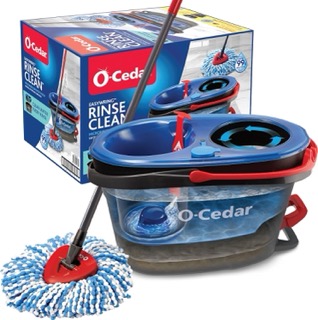
O-Cedar EasyWring RinseClean Spin Mop System Review: Worth Buying?
Does separate clean water make mopping easier? Explore the O-Cedar Eas…
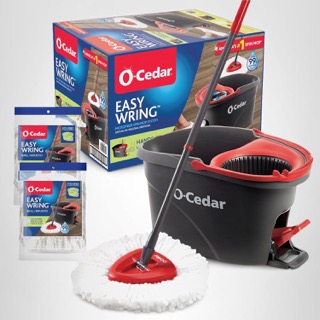
O-Cedar EasyWring Spin Mop Review: Is It Worth Buying?
Does easier wringing make the O-Cedar EasyWring spin mop worth buying?…
Roborock Saros 10R Robot Vacuum Review: Is It Worth the Premium Price?
Is the Roborock Saros 10R worth its premium price? This in-depth revie…

Roborock Qrevo S Pro Robot Vacuum Review: Is It Worth Buying?
The Roborock Qrevo S Pro promises less daily vacuuming and mop care. T…

10 Best Roborock Robot Vacuum Models: Which Fits Your Home?
Which Roborock robot vacuum fits your home? Compare 10 models across t…
5 Best Microfiber Cleaning Cloths: Which Should You Buy?
Find the best microfiber cleaning cloth for your home. Compare five pi…
USANOOKS Microfiber Cleaning Cloth Review: Is the Grey 12 Pack Worth It?
Considering the USANOOKS grey 12 pack? Explore its size, color choices…

MR.SIGA Microfiber Cleaning Cloth Review: Is the 12 Pack Worth It?
Are MR.SIGA microfiber cleaning cloths worth a spot in your kitchen? T…
Amazon Basics Microfiber Cleaning Cloths Review: Are They Worth Buying?
Amazon Basics Microfiber Cleaning Cloths provide an affordable 24 pack…
Roborock Q7 M5+ Robot Vacuum Review: Is This Budget Vacuum and Mop Worth It?
Can an affordable robot really vacuum, mop and empty itself effectivel…