

This article may contain affiliate links. If you purchase through these links, we may earn a small commission at no additional cost to you. As an Amazon Associate, we earn from qualifying purchases.
Ever notice how dusting with a paper towel just pushes the dirt from one side of the table to the other? Cotton rags aren’t much better; they leave lint all over your glass, and reaching for disposable wipes every time you wipe up a small mess gets expensive fast.
That’s where Amazon Basics Microfiber Cleaning Cloths come in. It’s a refreshingly simple fix: 24 reusable cloths built for dusting, wiping up spills, cleaning your car, and polishing pretty much any surface around the house.
The pack is affordable, comes in a generous quantity, and it’s one of the most popular options out there for good reason. That said, it’s worth knowing these are lightweight, everyday cleaning cloths, not thick, professional-grade detailing towels. That’s a real distinction, and one that matters depending on what you’re using them for.
In this review, we’ll break down how these cloths actually perform: their cleaning power, absorbency, durability, how safe they are on different surfaces, how to wash and care for them, and whether they’re worth the money. We’ll also cover exactly where they shine and when you’d be better off reaching for a more specialized microfiber towel instead.
Amazon Basics Microfiber Cleaning Cloths Review: Quick Verdict
Amazon Basics Microfiber Cleaning Cloths are worth buying for affordable everyday cleaning. The 24 reusable, machine-washable cloths work well for dusting, wiping counters, cleaning appliances, absorbing small spills, and basic car care. However, they are thinner than premium microfiber towels and are not ideal for professional detailing or drying large surfaces.
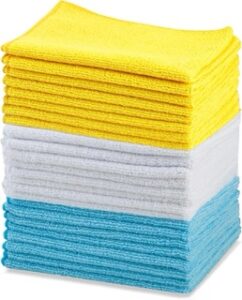
Amazon Basics Microfiber Cleaning Cloths
✔ Main advantage: 24 versatile, reusable cloths
✔ Biggest limitation: Relatively thin material
✔ Overall verdict: An excellent budget choice for general cleaning
Amazon Basics Microfiber Cleaning Cloths at a Glance
The reviewed package contains 24 cloths measuring 16 by 12 inches each. The selected variation includes blue, white, and yellow cloths. Amazon describes them as suitable for dry cleaning or use with liquid cleaners.
The material is listed as 90 percent polyester and 10 percent polyamide. Amazon also claims that the cloths can absorb up to eight times their weight and be reused hundreds of times. Those are manufacturer claims rather than results from a controlled test conducted for this review.
| Specification | Product detail |
| Product | Amazon Basics Microfiber Cleaning Cloths |
| Pack size | 24 cloths |
| Cloth size | 16 by 12 inches |
| Material | 90% polyester and 10% polyamide |
| Reviewed colors | Blue, white, and yellow |
| Cleaning methods | Dry, damp, or with an appropriate cleaner |
| Reusable | Yes |
| Machine washable | Yes |
| Manufacturer absorbency claim | Up to eight times each cloth’s weight |
| Main purpose | General household and vehicle cleaning |
Important variation note: Amazon may display other colors, quantities, or package configurations on the same listing. Check the selected variation before ordering instead of assuming every option contains 24 cloths.
A reusable cloth can handle jobs that might otherwise require several paper towels. The savings from one cleaning session are small, but they can accumulate in a household that wipes counters, appliances, and spills every day.
A 24-pack allows you to keep clean cloths in the kitchen, bathroom, garage, and cleaning closet without moving one dirty rag through the entire home.
Microfiber is useful for catching fine dust. A dry cloth works well for loose surface dust, while a slightly damp one can collect stubborn particles with less chance of sending them back into the air.
These cloths are marketed for lint-free and streak-free cleaning. Technique still matters, especially on mirrors and dark appliances, but they generally make more sense than fluffy cotton towels for finishing smooth surfaces.
The three colors make it easy to establish a cleaning zone system. This may be the most practical benefit of buying a large multicolor pack.
Cleaning Performance on Common Household Messes
No microfiber cleaning cloths review is useful unless it separates light wiping from demanding cleaning. These cloths are capable general purpose cleaners, but they are not scrubbers, disinfectants, or oversized drying towels.
Dust and Loose Debris
Best approach: Use the cloth dry for visible dust, then use a separate damp cloth if residue remains.
The fibers catch dust effectively on tables, shelves, baseboards, blinds, and furniture. The Spruce selected these Amazon Basics cloths as its preferred cloth style dusting tool after evaluating dusting products. Its reviewer found them useful for small messes and eye level surfaces, although some trapped dust remained in the cloth after washing.
A common mistake is starting with a wet cloth on a heavily dusted surface. That can turn loose dust into gray streaks. Our guide to deep cleaning tips that work explains why dry dusting first usually produces a cleaner result.
Practical technique: Fold one cloth twice to create eight usable faces. When one face becomes dirty, unfold or refold it instead of spreading collected dust across the next surface.
Spills and Everyday Absorbency
Good for small spills: These cloths can handle spilled water, coffee drips, damp countertops, and the moisture left around a sink.
Amazon says each cloth can absorb up to eight times its own weight. The claim sounds impressive, but buyers should not interpret it as proof that one thin cloth will dry an entire vehicle or replace a thick kitchen towel.
For a small spill, place the cloth over the liquid and press before wiping. This allows the fibers to take up moisture instead of pushing the puddle forward. A slightly damp cloth may also begin absorbing faster than a completely dry one.
Where thickness matters: These are relatively thin cloths. Allrecipes praised their quick drying and streak free usefulness but identified thinness as the main compromise. If your priority is drying large dishes, soaking up a major spill, or drying a car after washing, a thicker towel will hold more liquid before it needs wringing.
Kitchen Grease and Food Residue
Amazon Basics Microfiber Cleaning Cloths
For a greasy stovetop or range hood, use a suitable cleaner first and let it loosen the residue. Wipe with one damp cloth, then finish with a clean, dry cloth.
For stainless steel, move in the direction of the visible grain. This reduces streaking and helps remove dirt sitting within the brushed texture. Our homemade stainless steel cleaner recipes explain which simple cleaners can be paired with a microfiber cloth and how to finish the surface without leaving an oily film.
Do not use one kitchen cloth indefinitely: Once a cloth becomes loaded with cooking oil, it may smear grease onto the next appliance. Move heavily soiled cloths directly to the laundry pile.
Glass, Mirrors, and Stainless Steel
Capable, but technique sensitive: The cloths can produce a clean finish on windows, mirrors, glass tables, and appliances, particularly when very little liquid is used.
The most reliable method uses two cloths:
- Use one lightly damp cloth to remove dirt and fingerprints.
- Use a clean, dry cloth immediately afterward to buff away remaining moisture.
- Check the surface from an angle where streaks are easier to see.
- Refold the cloth when its working face becomes wet or dirty.
Too much cleaner is often responsible for cloudy glass. The cloth then moves excess product around instead of removing it. If you prefer a simple cleaning solution, see our guide to using white vinegar for cleaning, including windows and mirrors.
For the clearest finish: A waffle weave glass towel may leave less lint and manage moisture better. These Amazon Basics cloths are suitable for routine glass cleaning, but they are not specialized glass polishing towels.
Bathroom Surfaces
Useful for daily maintenance: The cloths are well suited to sinks, faucets, counters, tile, shower doors, and the outside of the toilet.
They can remove toothpaste marks, dust, fingerprints, and recently formed soap residue. They cannot dissolve thick mineral deposits simply through wiping. Hard water buildup and established soap scum need an appropriate cleaner and enough contact time.
Use separate cloths for the toilet and higher bathroom surfaces. If you make your own cleaning solutions, our homemade bathroom cleaner guide includes options for different bathroom materials.
Cleaning is not the same as disinfecting: A cloth removes visible soil. It does not automatically disinfect a surface. If disinfection is needed, use an EPA-registered product according to its label, including the required wet contact time.
Granite and Quartz Countertops
Suitable for routine wiping: A clean, soft microfiber cloth is useful for removing crumbs, fingerprints, and light residue from sealed stone and engineered quartz.
The cleaner paired with the cloth matters. Acidic mixtures can damage acid-sensitive natural stone, while excessive product can leave quartz looking cloudy. Use a cleaner approved for the specific material and keep the cloth only lightly damp.
For product options and safe cleaning methods, read our guides to the best cleaner for granite countertops and the best cleaner for quartz countertops.
Prevent accidental scratches: Shake crumbs from the cloth before wiping. Even a soft cloth can drag hard grit across a polished surface if debris becomes trapped in its fibers.
Carpet and Upholstery Spills
Use for blotting, not scrubbing: The cloth’s size and absorbency make it useful for lifting moisture from a fresh carpet or upholstery spill.
Press firmly and move to a clean section as the stain transfers. Aggressive rubbing can spread the spill and drive it deeper into the fibers. Our homemade carpet cleaner recipe explains how to treat common stains while using a microfiber cloth to blot rather than scrub.
Car Interior and Exterior
Amazon Basics Microfiber Cleaning Cloths
These cloths are suitable for wiping dashboards, door panels, cupholders, windows, and other interior surfaces. Having 24 cloths also makes it easier to separate greasy wheel and door jamb work from cleaner interior jobs.
Amazon markets the cloths for cars, trucks, and boats and states that they will not scratch paint, vinyl, glass, or other finishes. That claim assumes the cloth is clean and used properly.
Not the best drying towel: The lightweight construction means you may need several cloths to dry a vehicle. A large plush drying towel will be faster and is better suited to holding substantial amounts of water.
Use caution on paint: Do not wipe dusty paint with a dry cloth. Hard particles trapped between the towel and clear coat can cause fine marks, regardless of how soft the cloth feels. Rinse away loose grit first and use clean towels reserved only for paint.
Screens, Eyeglasses, and Camera Lenses
Choose a dedicated cloth when the surface is expensive: Amazon describes these cloths as safe for glass, but general household microfiber is not automatically the best choice for coated screens, lenses, and precision optics.
The Amazon Basics cloths can be used for the exterior of many electronics, keyboards, and device cases. For a laptop display, however, use the device manufacturer’s instructions and a completely clean cloth. Never use a cloth that has previously held grease, abrasive particles, furniture polish, or household cleaner.
Our guide on how to clean a laptop screen safely explains how to control moisture around screens and electronic openings.
For camera lenses, prescription glasses, or fragile coatings, a dedicated optical microfiber cloth is the safer choice.
A Practical Color-Coded Cleaning System
The three colors are more than a cosmetic detail. They can help prevent a cloth used around the toilet from returning to the kitchen counter.
Amazon does not assign an official room to each color, so you can create a system that suits your home. The important part is using it consistently.
| Cloth color | Suggested cleaning zone | Examples |
| Blue | Kitchen | Counters, appliance exteriors, cabinet fronts |
| Yellow | Bathroom | Sink, faucet, tile, shower door |
| White | Glass and low soil areas | Mirrors, windows, stainless steel finishing |
Keep one exception: Reserve a few clearly marked cloths for the toilet. Do not rely only on color if several people handle the laundry. A separate labeled container makes the system easier to follow.
For vehicle cleaning: Keep automotive cloths in a different bin altogether. Brake dust, road grime, wax, and vehicle chemicals should not enter the household cleaning rotation.
Are These Cloths Safe for Every Surface?
No cleaning cloth is safe in every situation. Surface damage is often caused by debris trapped in the cloth, the wrong cleaning chemical, excessive pressure, or residue left from a previous job.
Painted, Polished, and Delicate Surfaces
Amazon describes the material as ultra-soft and nonabrasive. That makes it appropriate for many finished surfaces when the cloth is clean.
Before wiping an expensive or delicate item:
- Check the manufacturer’s cleaning instructions.
- Shake or wash the cloth to remove trapped particles.
- Test a small hidden area.
- Apply light pressure.
- Stop if the cloth drags or leaves visible marks.
A cloth used on a greasy stove should never move directly to polished furniture. Washing does not always remove every particle or chemical residue on the first cycle.
Automotive Paint and Glossy Finishes
Thickness and fiber density influence how a towel behaves on delicate finishes. The exact GSM, or grams per square meter, is not provided on the reviewed Amazon listing. Without that information, it would be misleading to classify these as premium paint correction or finishing towels.
Real Simple notes that microfiber density affects the tasks for which a towel is best suited. Its editors classified Amazon Basics as a budget option, while recommending more specialized cloths for glass, electronics, delicate surfaces, and car detailing.
These cloths make sense for ordinary washing and interior cleaning. Enthusiasts protecting a carefully polished vehicle may prefer a plush towel with a verified GSM and edgeless construction.
Budget Microfiber Versus Premium Microfiber
Amazon Basics competes primarily on quantity and value. Premium microfiber cloths usually compete on thickness, weave, edge construction, or specialization.
| Factor | Amazon Basics cloths | Premium microfiber cloths |
| Primary strength | Affordable general cleaning | Task specific performance |
| Pack quantity | 24 in the reviewed option | Often fewer cloths |
| Thickness | Lightweight | Usually thicker options available |
| GSM disclosure | Not shown on reviewed listing | More commonly provided |
| Drying large areas | Requires more wringing or cloths | Plush drying towels hold more water |
| Glass polishing | Suitable for routine cleaning | Waffle weave may finish more cleanly |
| Car detailing | Best for basic jobs | Paint specific towels offer more control |
| Replacement concern | Lower cost per cloth | More expensive to replace |
| Color coding | Three colors included | Depends on the set |
Why Amazon Basics?
You want plenty of cloths for routine dusting, wiping, and light spill cleanup.
Choose premium microfiber if: You need a thicker hand feel, verified density, specialized weave, edgeless finish, or better performance on a particular surface.
Mr. Siga is a common step up for buyers who want a more substantial general-purpose cloth. MagicFiber focuses on screens and lenses. Chemical Guys and The Rag Company offer more specialized automotive and glass options. You do not need those specialized products for every counter or dusty shelf, but their construction may better suit high-risk finishes.
Washing and Caring for Amazon Basics Microfiber Cloths
Poor wash care can turn a useful microfiber cloth into a streaky, lint-covered rag. Amazon says the cloths are machine washable and specifically instructs buyers to wash them separately before the first use.
How to Wash Them
- Shake loose dirt from the cloths before placing them in the washer.
- Separate heavily greasy automotive cloths from household cloths.
- Wash microfiber separately from lint-producing cotton towels.
- Use a modest amount of mild liquid detergent.
- Follow the product label for the correct water temperature and cycle.
- Skip fabric softener, dryer sheets, and chlorine bleach unless the care label explicitly permits them.
- Air dry or use low dryer heat.
Arm & Hammer’s microfiber care guidance also recommends washing microfiber separately, using cold water for lightly soiled cloths or warm water for heavier soil, choosing a gentle cycle, and drying on low heat. It warns that fabric softener can impair the fibers.
Why separate washing matters: Microfiber is designed to collect particles. When washed with cotton towels, it can collect the lint released by those towels and later deposit it on glass or appliances.
How to Deep Clean Microfiber Cloths
If the cloths smell greasy or no longer absorb as well, product buildup may be coating the fibers.
- Sort cloths by use and contamination level.
- Rinse out loose grime and excess cleaner.
- Soak heavily soiled cloths in warm water with a small amount of mild liquid detergent.
- Gently work the fabric by hand.
- Machine wash according to the care label.
- Run an extra rinse if detergent residue remains.
- Air dry or tumble dry using low heat.
- Check absorbency before returning the cloth to delicate surfaces.
Do not pour extra detergent into the wash in an attempt to remove buildup. Excess detergent can become part of the buildup.
Replacement signs: Retire a cloth when it remains stiff after washing, smears residue, loses absorbency, develops rough areas, or has edges that are badly unraveling. Old cloths can still be assigned to dirty jobs such as baseboards, outdoor furniture, or garage cleanup.
Color Bleeding During the First Wash
The blue, yellow, and white cloths should be washed separately before their first use, as stated on the listing. Real Simple also identifies washing with like colors as an important precaution because color transfer can occur.
Do not wash a new multicolor set with white clothing or pale household linens. Once you know how the colors behave, you can decide whether to combine them in later microfiber loads.
Durability After Repeated Washing
The manufacturer’s position: Amazon says the cloths can be reused hundreds of times. This does not guarantee identical performance for every cloth through hundreds of washes. Detergent, heat, chemicals, surface debris, and frequency of use will all affect its lifespan.
Independent experience: A long-term review published by The Kitchn reported that the cloths remained sturdy after many washer cycles and did not leave streaks on quartz counters or stainless appliances. That is one reviewer’s household experience, not a standardized durability test, but it supports the idea that proper washing can extend their useful life.
The practical expectation: These are inexpensive work cloths. Some may remain in good condition for a long time, while heavily used kitchen or vehicle cloths will wear sooner. Their large pack makes it possible to rotate cloths and reduce repeated wear on the same few pieces.
Real Customer Feedback Analysis
At the time the product page was reviewed, Amazon displayed a 4.7 out of 5 star rating from more than 87,000 ratings. Ratings and sales information can change, but the large review history shows that this is an established product rather than a new listing with limited feedback.
What Buyers Consistently Like
Buyers appreciate having enough cloths to keep separate stacks in the kitchen, bathroom, garage, and vehicle.
Everyday versatility:
The cloths are used for dusting, spills, counters, appliances, glass, vehicle interiors, and general cleanup.
Budget-friendly replacement:
Losing or staining one cloth is less frustrating when it comes from an affordable 24-pack.
Useful absorbency:
Many positive experiences involve routine spills and damp wiping rather than drying very large surfaces. Washable construction: The ability to reuse the cloths makes them more practical than disposable wipes for frequent low risk cleaning.
What Disappoints Some Buyers
They feel thin: This is the clearest tradeoff. Buyers expecting a plush towel may find the material lighter than anticipated.
Dry cloths may resist water initially: Some microfiber cloths do not immediately soak up liquid when completely dry. Pressing the cloth onto the spill or dampening it first can improve pickup.
Colors may bleed: The first wash requires care, particularly around white cloths and light colored laundry.
Lint or streaks can still occur: A dirty cloth, too much cleaner, detergent residue, or washing with cotton can all reduce a clean finish.
Not ideal for specialized detailing: General-purpose cloths may not satisfy buyers who want a verified GSM, extra plush pile, or edgeless towel for delicate automotive paint.
Which Complaints Matter Most?
Thinness matters if absorbency is your priority. These are not the first choice for drying a full vehicle, a large shower, or a sink full of dishes.
Color transfer matters during laundry. Following the first wash instruction and separating light fabrics reduces the risk.
Streaking is often correctable. Use less cleaner, refold the cloth frequently, and finish with a separate dry cloth.
Surface damage is preventable but never impossible. Keep cloths clean, separate them by task, and remove hard debris before touching polished surfaces.
The True Cost Per Use
A fixed Amazon price would quickly make this section outdated, so the most useful measure is cost per cloth.
Use this calculation:
Current package price ÷ 24 = cost per cloth
Then estimate cost per use:
Cost per cloth ÷ number of successful uses = approximate cost per use
For example, a cloth that survives dozens of cleaning and washing cycles can cost very little per job, even if it eventually becomes a garage rag. The value becomes stronger when each cloth replaces paper towels during ordinary dusting and wiping.
The pack creates value only if you reuse it: Treating these cloths like disposable wipes eliminates their main financial advantage. Washing full microfiber loads and rotating cloths by task will produce better value than laundering two cloths after every light use.
Can They Replace Paper Towels?
For most routine cleaning, yes: These cloths can replace paper towels for dusting, wiping water, cleaning appliance exteriors, polishing mirrors, and removing ordinary countertop messes.
Keep paper towels for certain jobs: Disposable towels remain useful for pet waste, raw meat juices, heavy grease, bodily fluids, and substances that could contaminate a reusable cloth or damage a washing machine.
There is an environmental tradeoff: Reusing a cloth can reduce dependence on disposable paper products, but microfiber is synthetic. Research confirms that synthetic textiles can release microscopic fibers during washing.
Wash only when necessary, use full loads, select lower temperatures when the care label allows, and keep cloths in service as long as they remain effective. Reusable does not automatically mean impact free, but thoughtful use can reduce both waste and unnecessary laundering.
Are Amazon Basics Among the Best Microfiber Cleaning Cloths?
They are among the stronger budget choices, not the universal best choice.
The Amazon Basics Microfiber Cleaning Cloths make the most sense when the buyer wants a large, inexpensive pack for varied household jobs. They are less compelling when thickness, premium finishing, maximum liquid capacity, or specialized surface care matters more than quantity.
Real Simple categorized them as its budget selection while choosing different cloths for glass, electronics, delicate surfaces, deep cleaning, and vehicle detailing. That is the right way to understand this product. It is a practical generalist rather than a specialist.
Amazon Basics Microfiber Cleaning Cloths (Pros & Cons)
✔ 24 cloths provide excellent coverage for multiple rooms and tasks
✔ Useful 16 by 12 inch size
✔ Can be used dry, damp, or with a suitable cleaner
✔ Machine washable and reusable
✔ Three colors support a simple cleaning zone system
✔ Effective for dust, fingerprints, light spills, and routine wiping
✔ Low replacement concern compared with premium towels
Cons
✔ Thinner than many premium microfiber cloths
✔ Not the fastest option for drying large surfaces
✔ Must be washed separately before first use
✔ Color transfer is possible if wash instructions are ignored
✔ No GSM is provided on the reviewed listing
✔ Not ideal for professional car detailing or expensive optical surfaces
✔ Poor laundry care can lead to lint, residue, or reduced absorbency
Who Should Buy Them?
Amazon Basics Microfiber Cleaning Cloths are a good match for:
- Households trying to reduce routine paper towel use
- Buyers who want an inexpensive first set of microfiber cloths
- Families that need separate cloths for the kitchen and bathroom
- People who clean counters and appliances frequently
- Anyone who wants a color coded cleaning system
- Vehicle owners needing cloths for basic interior and exterior cleanup
- Landlords, cleaners, or homeowners who prefer a large rotating supply
Who Should Skip Them?
Consider another product if:
- You want a thick kitchen towel for drying dishes
- You need an oversized towel for drying a full vehicle
- You perform professional paint correction or automotive detailing
- You need a verified GSM or a particular microfiber weave
- You are cleaning camera lenses, coated glasses, or expensive optical equipment
- You want a biodegradable cloth rather than synthetic microfiber
- You prefer a smaller pack of thicker, more premium cloths
Frequently Asked Questions
Are Amazon Basics microfiber cleaning cloths lint free?
They are marketed as lint free, but results depend on care and use. Washing them with cotton towels can load the fibers with lint. Excess detergent may also leave residue that becomes visible on glass. Wash microfiber separately and use a clean dry cloth for the finishing pass.
Are Amazon Basics microfiber cloths absorbent?
Yes, they are suitable for small and moderate household spills. Amazon claims that each cloth can absorb up to eight times its own weight. Because the cloths are relatively thin, a thick towel will still be more convenient for drying large surfaces.
Can they be used without cleaning chemicals?
Yes, for many light cleaning jobs. Dry microfiber can collect dust, while a cloth dampened with water can remove fingerprints and fresh residue. Grease, mineral buildup, stains, and disinfection tasks may require a cleaner intended for the surface.
Can these cloths scratch car paint or furniture?
The cloths are described as nonabrasive, but trapped debris can still scratch a finish. Use a freshly cleaned cloth, remove grit first, apply light pressure, and test a hidden area when cleaning valuable surfaces.
Can Amazon Basics microfiber cloths go in the washing machine?
Yes. Amazon lists them as machine washable. Wash them separately before first use and follow the care instructions included with the product.
Can they be washed with regular towels?
It is better to wash them separately. Microfiber can collect lint released by cotton towels. That lint may later transfer to mirrors, windows, appliances, or vehicle surfaces.
Should fabric softener be used on microfiber cloths?
No. Fabric softener can coat the fibers and reduce their ability to collect dirt and absorb liquid. Dryer sheets can create a similar problem.
How long do the cloths last?
There is no single lifespan that applies to every household. Amazon says they can be reused hundreds of times, but durability depends on the cleaning job, wash temperature, detergent, dryer heat, and exposure to grease or harsh chemicals.
Do the colors bleed in the wash?
Color transfer is possible, especially during early washes. Amazon instructs buyers to wash the cloths separately before first use. Keep them away from white clothing and light linens.
Are they good for windows and mirrors?
They work well for routine glass cleaning when used correctly. Clean with one lightly damp cloth, then buff with a second dry cloth. A dedicated waffle weave towel may perform better when a perfectly lint free finish is essential.
Are they safe for granite and quartz?
The cloth itself is appropriate for routine wiping when clean, but the cleaning solution must also be safe for the surface. Avoid dragging crumbs or grit across polished countertops, and do not use acidic cleaners on acid sensitive natural stone.
Are Amazon Basics cloths better than paper towels?
They offer better value for repeated dusting and wiping because they can be washed and reused. Paper towels remain more practical for highly contaminated, greasy, or unpleasant messes that you do not want entering the laundry.
Final Verdict: Are Amazon Basics Microfiber Cleaning Cloths Worth It?
Yes, for general household cleaning. The Amazon Basics Microfiber Cleaning Cloths offer a convincing combination of quantity, useful size, washable construction, and everyday versatility. They can handle dust, fingerprints, light spills, countertops, appliance exteriors, bathroom surfaces, and basic vehicle cleaning without making each cloth feel too valuable to use.
The compromise is thickness. These are practical work cloths, not plush drying towels or professional detailing products. They may also produce disappointing results if they are washed with linty fabrics, overloaded with detergent, or reused across incompatible cleaning tasks.
Buy them if you want an affordable 24-pack that can be divided among rooms and used regularly. Choose a premium or specialized microfiber towel if you need maximum absorbency, verified density, optical cleaning, or careful automotive finishing.